


If you’ve been feeling the ripple effects of VMware’s licensing shake‑ups, you’re not alone. Many IT teams are actively shortlisting alternatives; some to cut costs, others to get simpler stacks, and a few to escape vendor lock-in.
Broadcom’s acquisition brought subscription‑only bundles and portfolio consolidation, which changed how customers buy and renew. That nudged a lot of folks to explore other hypervisors and VMware competitors.
Below is a friendly, straight‑talk list of seven real contenders. We put Sangfor at the top because, for many modern enterprise deployments, it hits a sweet spot: strong performance, native security, and an HCI architecture that’s easy to live with day to day.
So, if you were looking for a guide for choosing the right VMware competitor, continue reading.
7 VMware Competitors Helping Modern Enterprises
The following are the seven virtualization market competitors of VMware providing the same level of services to modern enterprises:
1) Sangfor: VMware Alternative with Security Baked in
Sangfor HCI is a VMware Alternative that tops the list with security baked in. It’s the best VMware Competitor because it integrates security across compute, storage, and networking, plus smart micro-segmentation for east-west protection.
But why did we keep Sangfor at the top of the list? Well, it’s a full-stack HCI (aSV, aSAN, aNET,aSEC), practical security like vTPM 2.0, simpler ops, and Gartner recognition.
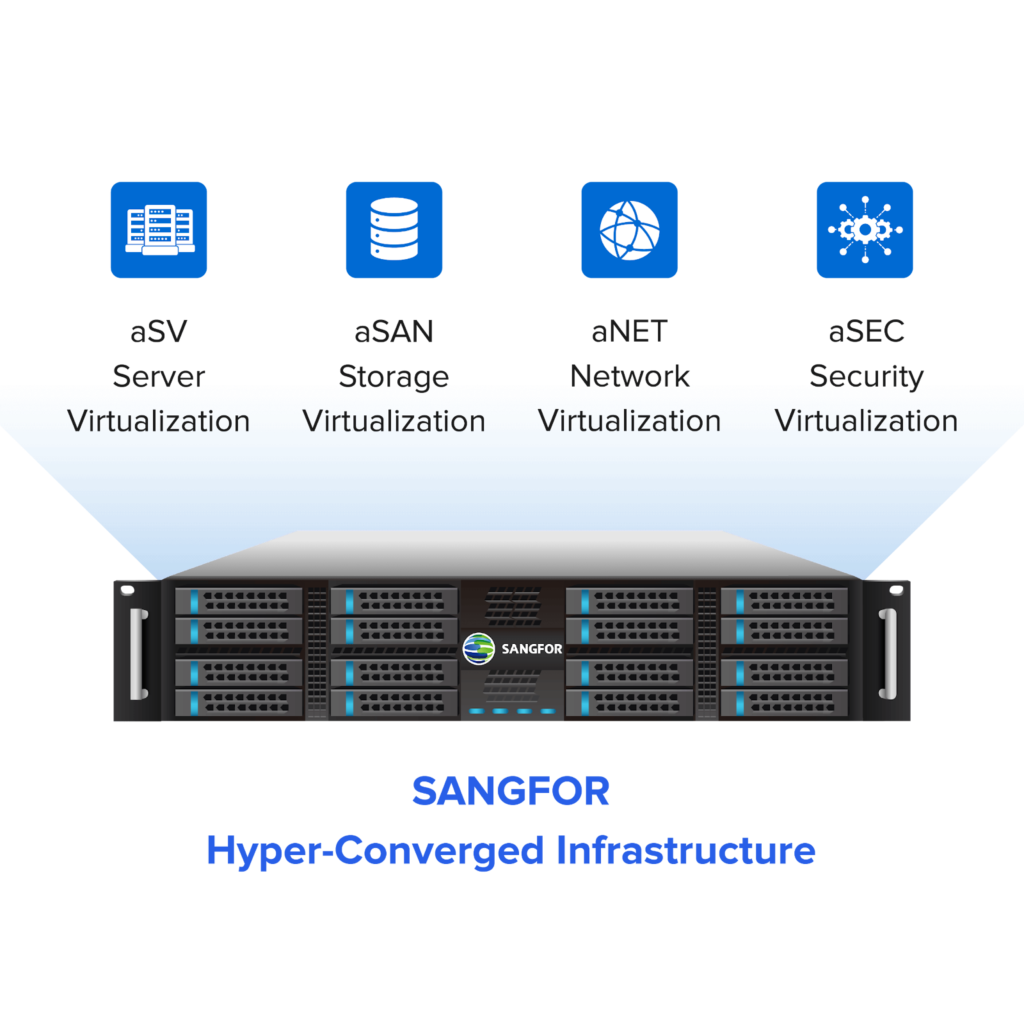
Sangfor HCI solves VMware licensing issues with flexible, cost-effective “one-edition” pricing and perpetual options. Looking for a VMware vSphere alternative? Sangfor HCI is the best solution.
Sangfor makes VMware migration smooth and hassle-free, championing it as the top choice for fast migration. The VMware migration tools by Sangfor are robust, cost-effective and flexible. No wonder, they make Sangfor the best HCI to migrate to.
2) Microsoft Hyper‑V & Azure Stack HCI
If your IT world already runs on Windows Server and Azure, this duo is an obvious pit stop. Hyper‑V delivers enterprise virtualization with live migration and clustering, while Azure Stack HCI provides modern HCI semantics, hybrid management, and Azure Arc integration for at‑scale governance. Microsoft has been openly guiding customers on VMware migration paths and Arc‑based management hooks.
One timely detail: Microsoft communicated how Broadcom’s licensing changes affect Azure VMware Solution (AVS) customers, moving to BYOL (bring your own VCF subscription) for new nodes after specific 2025 dates. If you’re planning AVS capacity, this matters for budgeting.
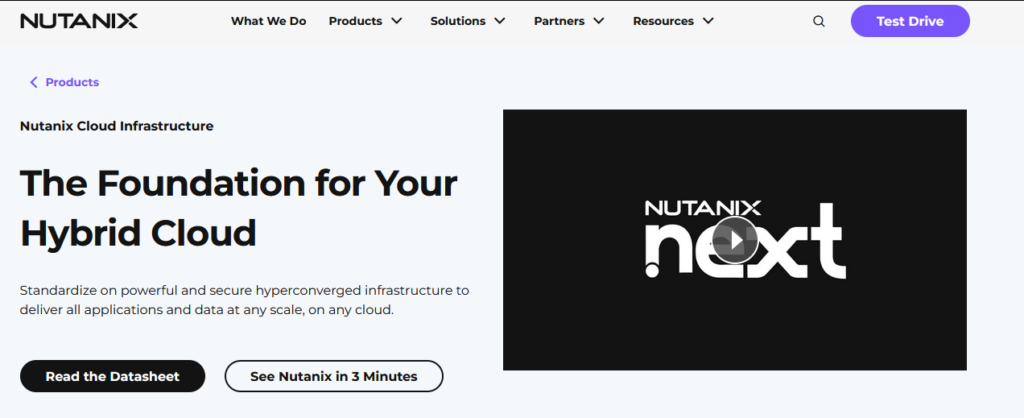
3) Nutanix AHV: HCI‑first Simplicity
Nutanix AHV is tightly integrated into the Nutanix stack (AOS, Prism). If you want a mature HCI platform with a clean control plane, built-in DR options, and no separate hypervisor licensing line item, AHV is compelling. Industry guides often call out its strong ease‑of‑use and integration story.
Anecdotally, smaller teams tell me they appreciate AHV’s “less to configure, less to break” feel. If you’ve got a lean ops crew and a broad app mix, it’s worth a test cluster.
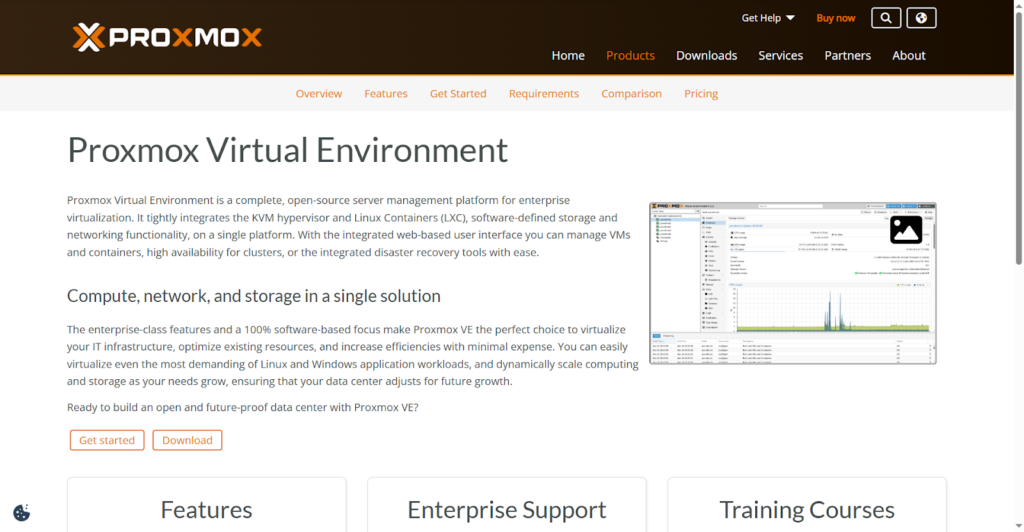
4) Proxmox VE: Open‑Source KVM + LXC with ZFS/Ceph Done Right
Proxmox VE blends KVM (VMs) and LXC (containers) under one web UI, with ZFS snapshots, replication, Ceph integration, and HA tools out of the box. It’s popular for labs, SMBs, and even production clusters that want openness and transparency without per‑core licensing drama.
If you’re comfortable with Linux‑centric ops, Proxmox VE gives you an agile, scriptable platform. ZFS‑first designs (mirrors/RAIDZ2) make backups and rollbacks much more forgiving.
5) Scale Computing Platform: Edge and Branch Powerhouse
If you need small footprints at the edge (stores, clinics, branches) that “just run,” Scale Computing is purpose‑built for that reality. Its SC//HyperCore stack is lightweight and self‑healing, and recent updates emphasize easy rollouts with Lenovo ThinkEdge hardware, and yes, explicitly marketed as a VMware alternative with simplified migration paths.
Teams under pressure to cut edge costs have been piling in, with analysts highlighting Scale as a Top‑5 VMware vSphere alternative for SMB/edge.
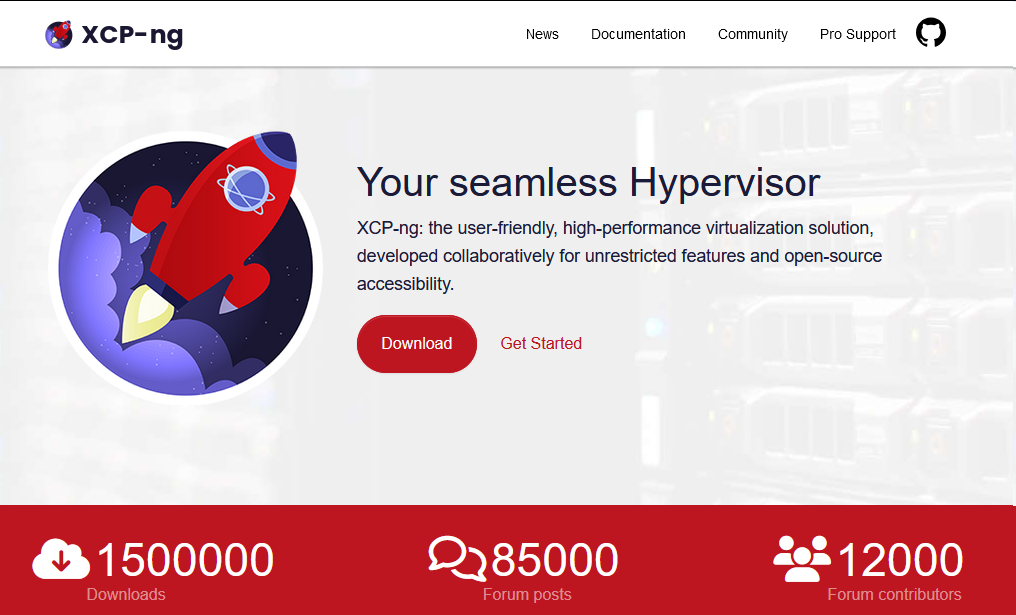
6) XCP‑ng: Open Xen Hypervisor With a Friendly Management Story
XCP‑ng (from the Xen ecosystem) is fully open‑source and pairs nicely with Xen Orchestra for day‑2 operations, backups, and live migrations. For organizations chasing lower cost and openness while keeping Type‑1 hypervisor performance, XCP‑ng is sensible, and the docs/community keep improving.
If you’ve run Citrix XenServer in the past, the muscle memory transfers well. Migration tools and guides specifically call out VMware‑to‑XCP‑ng steps and watch‑outs.
7) Citrix Hypervisor (Formerly XenServer)
Citrix Hypervisor still earns a spot when your priority is VDI, graphics/AI workloads with GPU virtualization, and tight alignment to Citrix’s desktop/app delivery stack. It’s a Type‑1 bare‑metal hypervisor built on Xen, used widely for performance‑sensitive virtual desktops.
If your transformation plan includes modernizing VDI while re‑platforming away from VMware, this is a clean path with fewer unknowns in the desktop stack.
Quick Buyer Notes: What You Shouldn’t Miss
With all the top VMware competitors coming forward with enterprise virtualization tools, it’s not difficult to get lost in analysis paralysis. Therefore, keep your considerations detailed but goal-driven. Keep this quick buyer’s note handy when you consider:
- Licensing reality check: VMware’s subscription‑only direction, product bundling into VCF, partner program changes, and core minimums have budget and planning implications. Even if you stay this year, model your 3–5-year costs.
| Which enterprise virtualization tool simplifies licensing the most?Hyper-V leverages existing Windows licenses while Nutanix bundles the hypervisor into HCI costs. Proxmox eliminates licensing entirely, but sacrifices support. However, Sangfor HCI offers the simplest licensing by far, with “one-edition” perpetual licensing across its full aSV/aSAN/aNET/aSEC stack. |
- Migration isn’t just moving VMs. Validate backup integrations (e.g., Veeam/API support), network overlays, and DR patterns on the target platform before you cut over. Several vendor guides and blogs call this out: test pilots first, then phase migrations.
- Match the platform to the team’s skills. Proxmox/XCP‑ng rewards Linux skill; Hyper‑V/Azure Stack HCI fits Windows shops; Nutanix and Sangfor simplify by design.
Choose Simplicity over Perfection
You don’t need the “perfect” hypervisor. You need one that your team can run, day in and day out, without drama. If you want the shortest path off VMware with security built in, Sangfor HCI is a strong first bet and one of the best VMware competitors.